Walk down Main Street in Collbran this month and the auditorium at 102 Main is still standing behind construction fencing, its faded yellow front and flagpole visible above the covered entry the way they've been for well over a century. The doors just don't open for anyone right now. The Town of Collbran's own site confirms the renovation is still underway, work meant to bring the 1905 building up to modern standards without losing what makes it worth saving. For most of this town's history, whatever needed an indoor room and a roof happened there. This year, it can't.
That closure lands in the same stretch of summer as two other facts of life here: Mesa County's Stage 2 fire restrictions, in place since late June with no lift announced, and the fall cattle drives that are about to start moving through town the way they do every year regardless of what else is going on. None of these three things are related on paper. Put side by side, they say something true about how a town this size actually functions day to day. Collbran runs on a small number of shared spaces and traditions, not a deep bench of redundant ones, and when even one of those pieces goes offline, the gap is felt by everyone who lives here rather than absorbed quietly the way it might be in a bigger place.
The room that held five generations is a construction site
The auditorium was built in 1905 for Dr. Zinkey, three years before Collbran was even incorporated as a town, and its distinctive round roof rafters were assembled on the ground and lifted into place with two hay derricks, a genuinely unusual feat of small-town engineering for the time. At 40 by 120 feet it was one of the largest auditoriums built in the West, and the first movies played there in 1914. Over the decades it hosted graduations, weddings, funerals, dances, roller skating nights, potlucks, craft fairs, and the annual Stockman's Banquet and Ball, the kind of formal night that shows up in family memory the way a first car or a first house does. It's on Mesa County's Register of Historic Landmarks, and locals involved with its preservation, including members of the Plateau Valley Historical Preservation Society, have been candid that the building means more to this town than its square footage suggests.
None of that history is in question. What matters for anyone living here right now is more practical: Collbran doesn't have a second building like it. There's no backup gymnasium or civic center that quietly absorbs the events the auditorium used to hold. When the town's one large indoor gathering space goes dark for renovation, there isn't a plan B sitting a block away. There's just whatever people improvise.
Stage 2 didn't just change your campsite, it changed your yard
Mesa County entered Stage 2 fire restrictions at 12:01 a.m. on Friday, June 26, and as of this writing the county's fire restrictions page still lists them as in effect until further notice. The distinction that catches people off guard is how much further Stage 2 reaches than Stage 1. Stage 1 still allows a campfire in a designated ring. Stage 2 doesn't distinguish between a campground and a backyard. It applies to private land as well as public land inside the Grand Junction Field Office boundary, which means the restriction isn't really about the forest above town. It's about every yard in it.
Under Stage 2 right now:
- No wood fires of any kind, including fire pits, chimineas, and tiki torches, even on private property
- No fireworks at all, sparklers and poppers included, a step beyond Stage 1's ban on personal fireworks only
- Only liquid-fueled or gas-fueled devices are allowed, and they have to sit at least three feet from anything flammable
- Chainsaws and other combustion engines need a spark arrestor, a rule that exists because one recent fire in the county was traced to exactly that gap
- Agricultural burning still requires a Sheriff's Office permit and an on-site inspection first
A KJCT8 report from early July laid out the fine structure plainly: $500 for a first offense, $1,000 for a second. That's not a symbolic number. It's meant to be felt.
Main Street's other big weekend leaned on the street itself
Collbran's Rodeo Grounds have hosted events since the 1920s, and the annual Heritage Days Rodeo around the Fourth of July still kicks off with the "Running of the Horses" straight down Main Street, a tradition the town keeps regardless of what's happening elsewhere in the calendar. This year that weekend happened while the auditorium sat mid-renovation, which meant the rodeo, the parade, and the outdoor gathering held up fine on their own footing. What that weekend didn't have was a backup indoor room for the parts of a small-town holiday that usually move inside once the sun sets, a dance, a banquet, a place to get out of the heat with a few hundred other people.
That's the clearest evidence of the pattern this piece is pointing at. Collbran has real redundancy for outdoor gathering. The street, the rodeo grounds, the open ground around town all still work exactly as they always have. What the town doesn't currently have is a second option for anything that needs four walls and a roof, because there's only ever been one building built for that job at that scale.
Fall's cattle drives don't answer to any of this
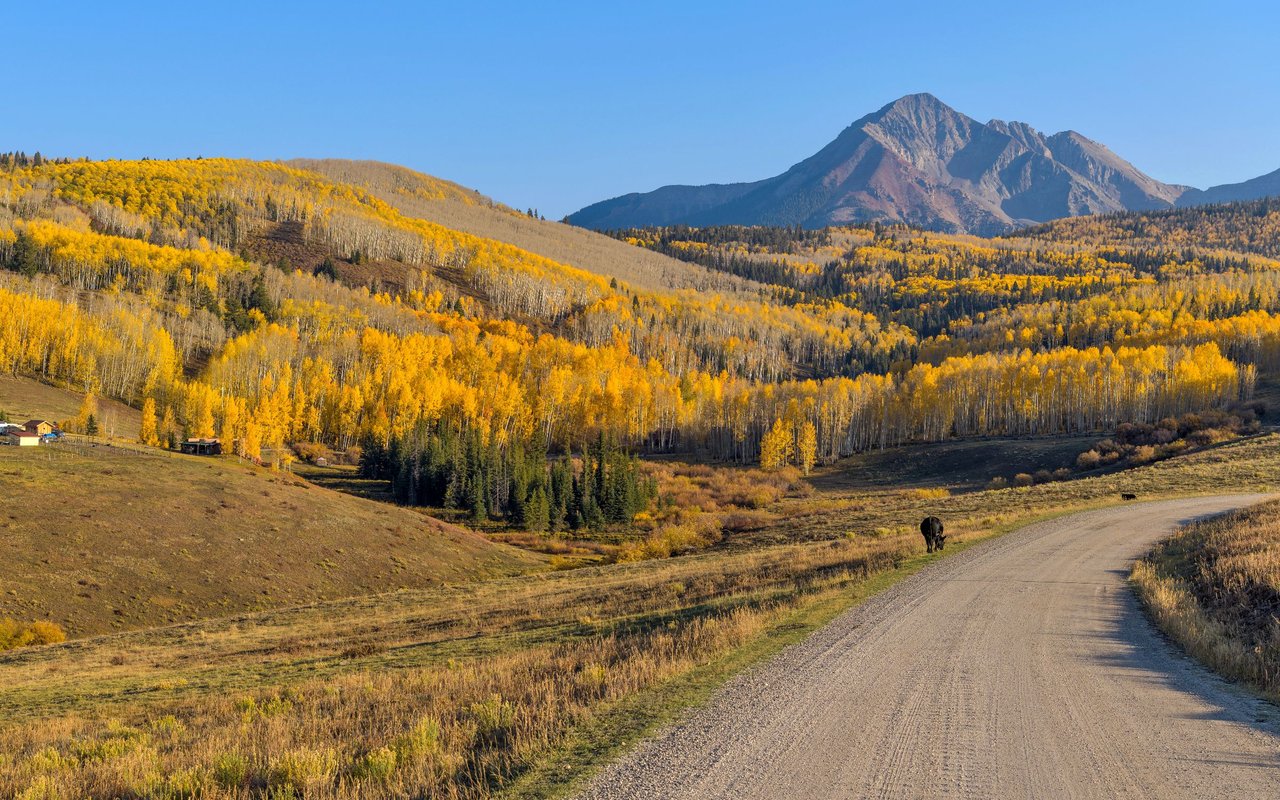
Every spring and fall, local ranchers drive cattle from one pasture to another, sometimes all the way up to Vega Reservoir, a tradition Collbran's own site describes as simply "a common occurrence in our sweet town." As August turns toward fall, that seasonal movement will start showing up on the roads through town again, the same way it does every year, and it's worth noticing that it's the one recurring piece of the town's calendar that neither the auditorium closure nor the fire restrictions touch. A cattle drive doesn't need an indoor room, and it doesn't produce an open flame. It just needs the road and the season, which is exactly what it's about to get.
That's a useful contrast. Not every part of how this town runs depends on a building or a permit. Some of it just depends on the land doing what it's always done, on schedule, whether or not anything else in town is under construction or under restriction.
What's actually still open
A day trip up the Grand Mesa Scenic and Historic Byway right now comes with its own subtractions. The Grand Mesa, Uncompahgre and Gunnison National Forests list Little Bear Campground and the Island Lake day-use area as closed for reconstruction, on top of the countywide Stage 2 rules governing everything else up there. If a weekend plan involved either spot, it needs a new destination this year.
Inside town, the small Mesa County Libraries branch here in Collbran is one of the few indoor public spaces still running on a normal schedule, limited hours and all. It's not a replacement for a 4,800-square-foot event hall, but it's a genuine data point about what still functions here while the bigger room is closed.
None of this adds up to a town in crisis. It adds up to a town whose gathering infrastructure is thinner than its full calendar suggests, and this is the year that becomes visible instead of theoretical. The pieces that depend on a building or a permit are the ones feeling the pinch. The pieces that depend on the land, the cattle drive, the rodeo grounds, the road itself, are running exactly as they always have.
If you're watching Collbran from a distance and trying to understand what year-round life here is actually like, past the highlight reel of a Fourth of July parade, that's the kind of detail worth knowing before anything else. Sorrel Properties works this valley in every season, not just the ones with a rodeo on the calendar. Let's Connect if you want to talk about what living here really involves.
This article is general information, not legal, tax or financial advice. Consult a qualified professional about your situation.