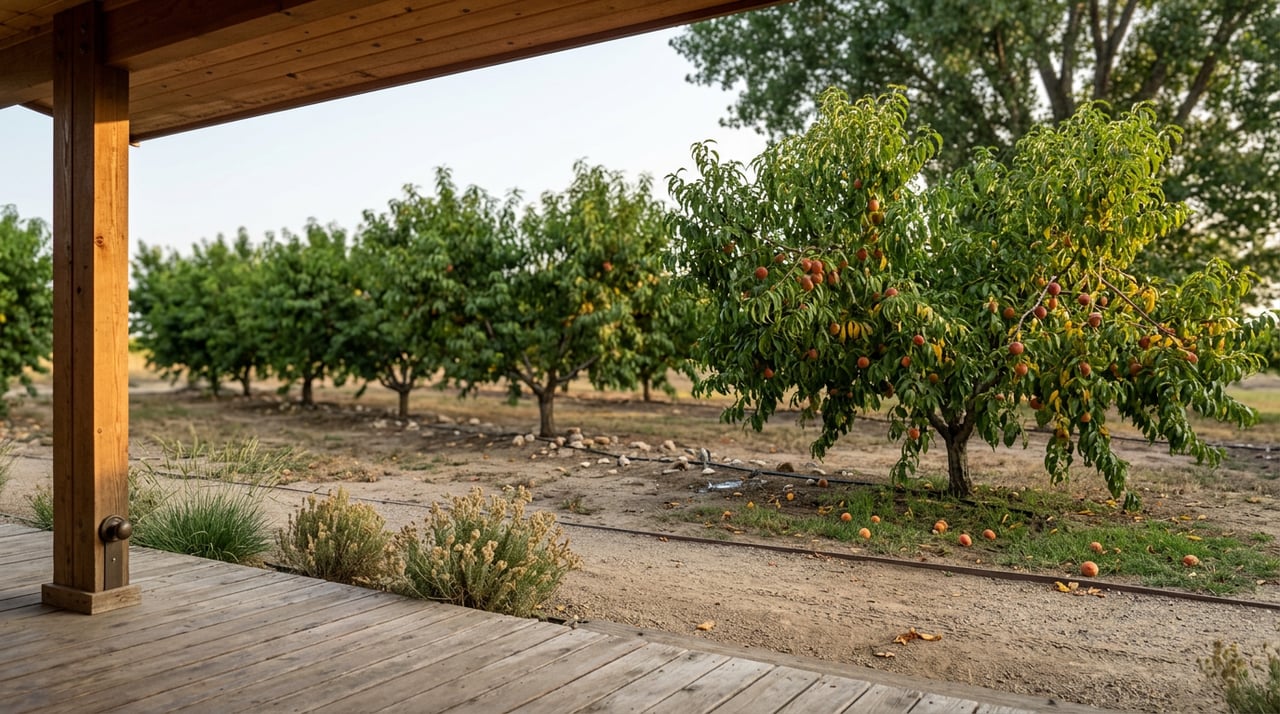
"I've quipped I'd give up a twelfth of my life if I could skip April every year," Charlie Talbott told the Colorado Sun this spring, describing the stretch of nights he spends glued to his phone and driving between orchard rows during freeze season. He was talking specifically about April 17 and 18, when temperatures over the Palisade valley dropped to 27 and 28 degrees and Talbott Farms' peach and cherry blossoms had about six hours to survive before the cold killed them for the year.
For anyone shopping a home along the Fruit and Wine Byway, nearby orchard activity is one part of the setting to understand alongside the listing photos of orchard rows and mountain light. The wind machines running through the dark, the smoke from orchard fires, the spray trucks working rows at odd hours: these aren't background texture that fades once you close. They're legally protected agricultural activity under Colorado law, and a new owner has almost no standing to object to them. Palisade's acreage listings are sitting on the market longer this year than they did a year ago, but that alone doesn't explain why. Understanding nearby agricultural activity helps a buyer shop the difference between an in-town block and an East Orchard Mesa parcel.
What Colorado's Right to Farm Act Actually Protects
Colorado's Right to Farm law, codified under Title 35, Article 3.5 of the state statutes, shields agricultural operations from nuisance lawsuits over the noise, dust, smoke, and odor that come with normal farming and ranching. The protection covers a wide range of operations, including horticulture, viticulture, orchard production, and livestock, as long as two conditions hold. The methods used have to line up with accepted farming and ranching practices, and the operation has to have existed before the surrounding nonagricultural development arrived.
That second condition is the one that matters for a Palisade buyer. If an orchard or vineyard was operating before a subdivision went in around it, the orchard's activity stays protected even as it changes and modernizes over time. Wind machines, frost-fighting fires, and spray schedules all fall under that umbrella. A homeowner's legal remedy, in the rare case a court does find an operation crossed into actual negligence, is limited to damages for lost property value or an injunction, and either side in that fight can be ordered to pay the other's attorney fees. That's a narrow path, and it isn't one built around noise complaints from someone who simply didn't expect the 2 a.m. engine sound.
There's a second layer worth knowing. Local governments can regulate agricultural operations sitting inside a municipality's limits as of July 1, 1981, or on land voluntarily annexed into a town after that date. Outside those boundaries, the state law runs without a local override. In practice, that means a parcel on unincorporated East Orchard Mesa acreage sits under the full state protection with no town ordinance layered on top, while a lot inside Palisade's incorporated limits could theoretically be subject to a local nuisance rule the town has chosen to pass. Knowing which side of that line a specific parcel sits on is a five-minute question for a title company or the Mesa County assessor, and it's one worth asking before the one that comes later, after the first frost night.
What the Palisade Sales Figures Show
Redfin's tracking of Palisade sales shows a market that's cooled compared to a year earlier. Over the three months ending May 2026, the median sale price came in at $500,000, down 4.8 percent from the same window the year before. Homes took an average of 45 days to sell, compared to 23 days the year before that, and only 10 homes changed hands in May 2026 against 17 in May 2025.
| Metric, three months ending May 2026 | 2026 figure | Change from 2025 |
|---|---|---|
| Median sale price | $500,000 | down 4.8% |
| Median price per square foot | $336 | up 17.0% |
| Average days on market | 45 days | up from 23 days |
| Homes sold in May | 10 | down from 17 |
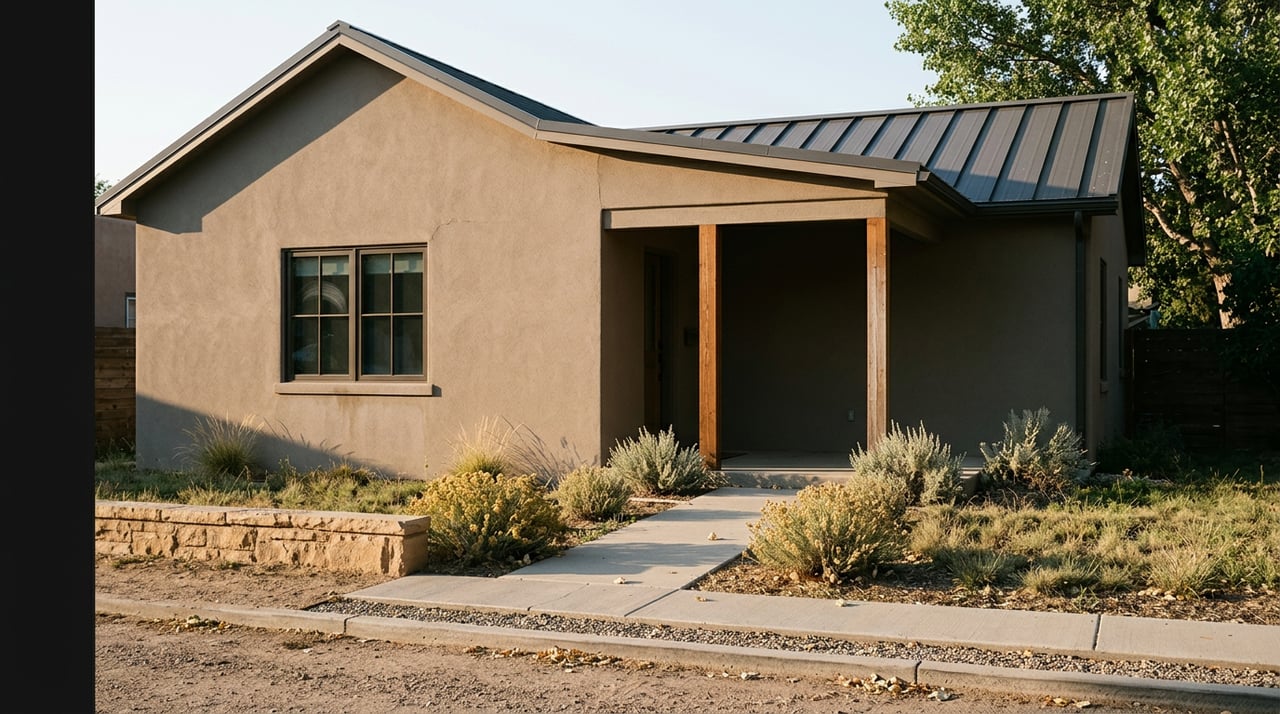
The price-per-square-foot figure is the one that doesn't fit a simple story about a cooling market. If overall median price is down while price per square foot is up double digits, the mix of what's actually selling may have shifted toward smaller homes. The figures alone don't establish whether buyers are choosing in-town bungalows and lower-maintenance townhomes near Riverbend Park over larger acreage listings with orchard or vineyard adjacency, or why.
Not Every Palisade Address Carries the Same Exposure
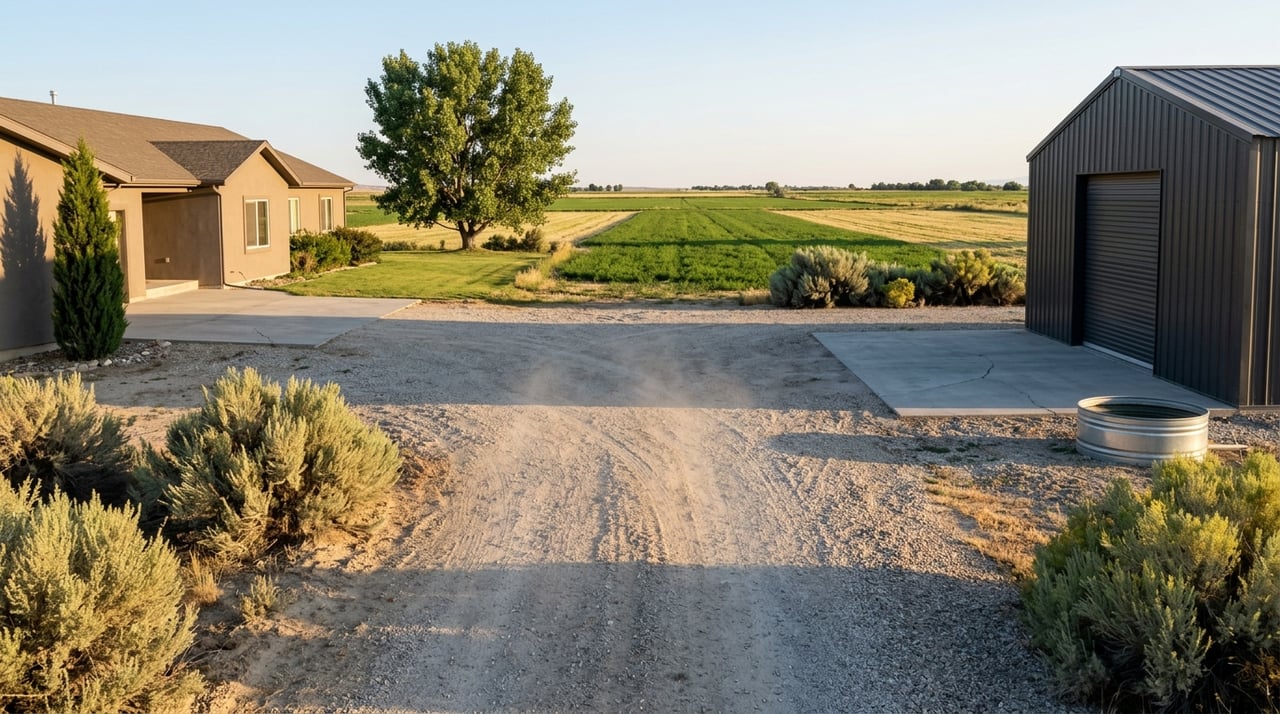
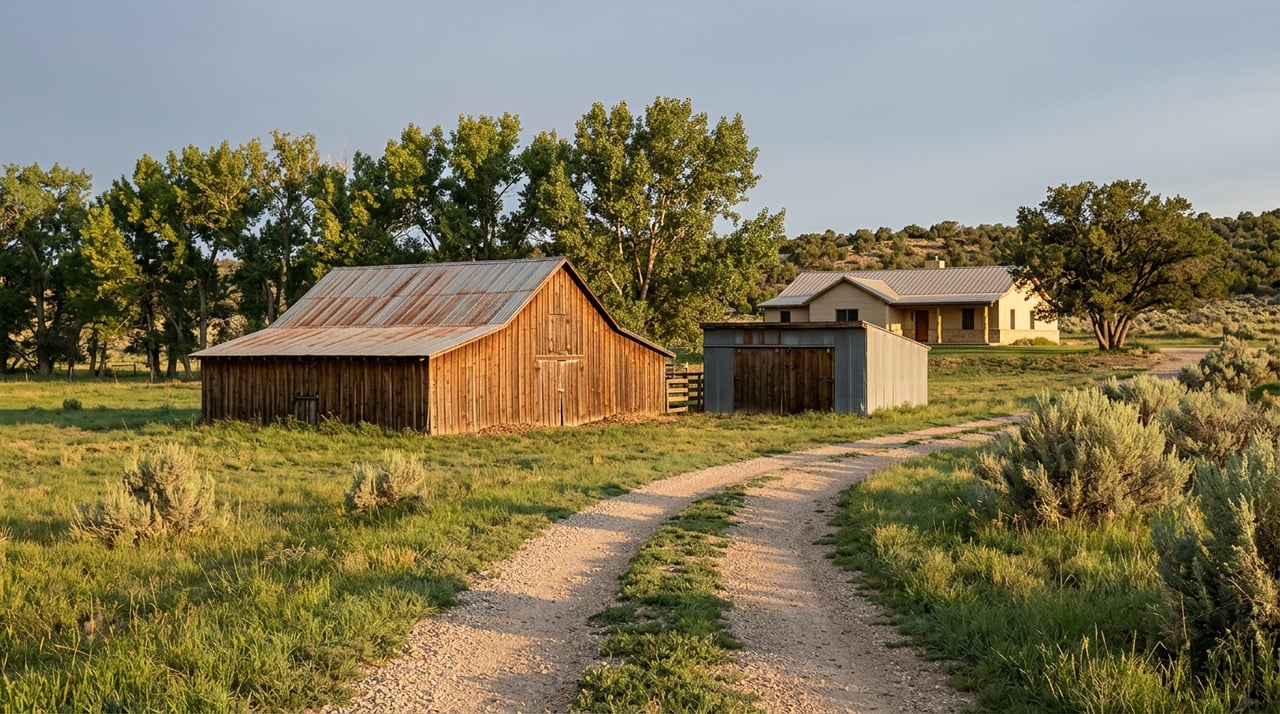
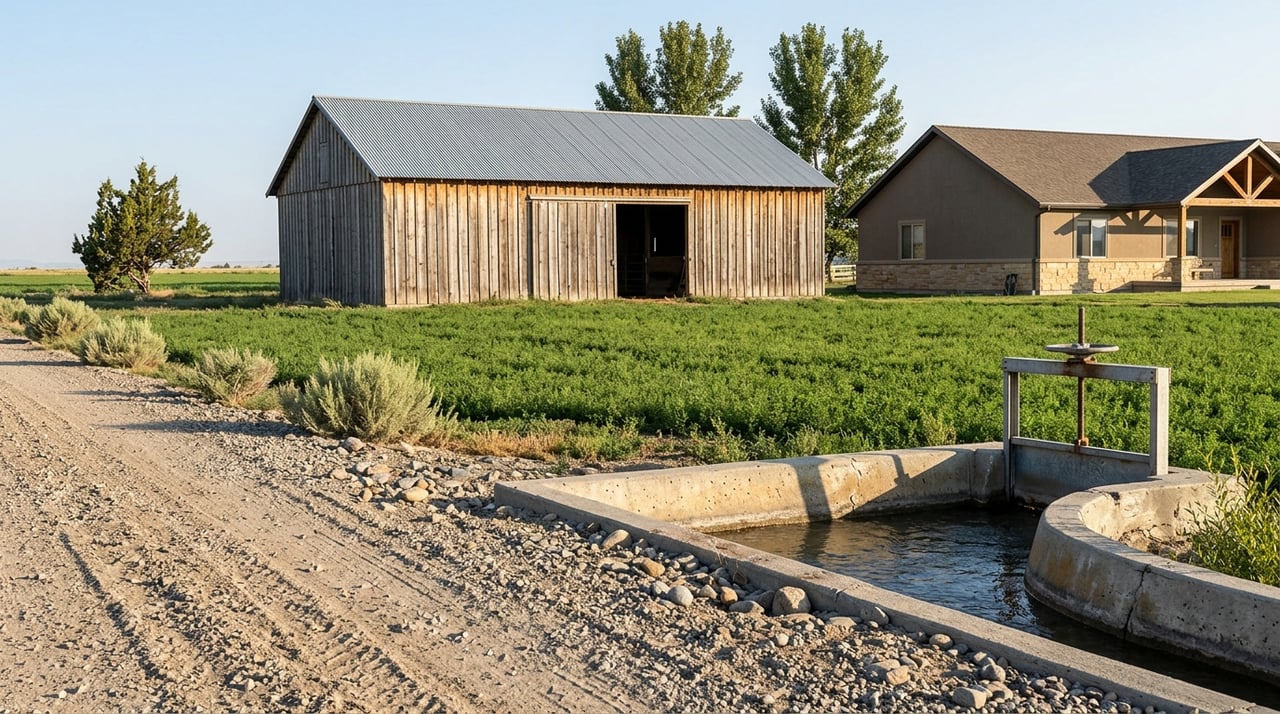
Comparing Palisade to Fruita or Clifton misses where the real tradeoff sits, which is inside Palisade itself. East Orchard Mesa properties often come with irrigation water rights, barns, and direct adjacency to active orchard or vineyard rows, which is exactly what draws hobby farmers and buyers chasing the working-land lifestyle, and exactly what puts a buyer closest to wind machines and spray schedules. Subdivisions built specifically to market that proximity, like Palisade Vineyards, developed around 2007, and Wine Valley Estates, built out from 2011 to 2013, sit in that same category. Blue Sage, completed in the early 2000s, and the older in-town blocks near Main Street tend to sit further from active rows, with deeper in-town lots and alley access that put more distance between a bedroom window and a grower's frost-fighting equipment.
None of this makes one location better than another. It makes them different transactions with different things to check before an offer goes in.
What a Buyer Can Actually Check Before Writing an Offer
- Ask how long the neighboring orchard or vineyard has been in operation relative to the subdivision's original plat date. If the ag operation predates the plat, Right to Farm protection almost certainly applies.
- If the parcel borders East Orchard Mesa acreage, ask specifically about wind machine count, placement, and how often they've run in recent freeze seasons, not just whether they exist.
- Confirm whether the parcel sits inside Palisade's incorporated town limits or in unincorporated Mesa County. That distinction determines whether any local nuisance ordinance could ever apply on top of the state law.
- Ask the seller or listing agent about the spray schedule history for the neighboring operation, including how far in advance growers typically communicate it to adjacent homeowners.
- If the property itself carries irrigation shares, confirm that status separately from the agricultural-exposure question. They're related but not the same due diligence item.
A Few Questions Worth Asking Directly
Can a new homeowner ask a grower to change spray timing or shut off wind machines? A grower operating under Right to Farm protection has no legal obligation to change practices for a new neighbor. A request can still be made neighbor to neighbor, but it carries no legal weight behind it.
Does this apply across all of Palisade, or mainly the acreage parcels? It applies wherever an agricultural operation predates the surrounding development and sits outside a boundary where a town has chosen to regulate it locally. In practice, that means East Orchard Mesa acreage carries more of this exposure than a block near Main Street.
A property's distance from an active orchard row changes what ownership actually feels like more than its square footage does. If you're weighing an East Orchard Mesa parcel against an in-town Palisade block, Sorrel Properties can walk the specific parcel with you and check exactly what's protected next door before you write the offer.
This article is general information, not legal, tax or financial advice. Consult a qualified professional about your situation.